
The 5 Best Ceremonial Matcha Powders for Calm Energy & Daily Focus
Can matcha really give you smooth energy, better focus, and a daily ritual you enjoy—or is it just clever marketing? We tried the most popular ceremonial matcha brands to find the ones that actually taste good and make you feel good.

Written by Annabelle on January 14, 2026
Senior Editor | TrustedExpertReviews
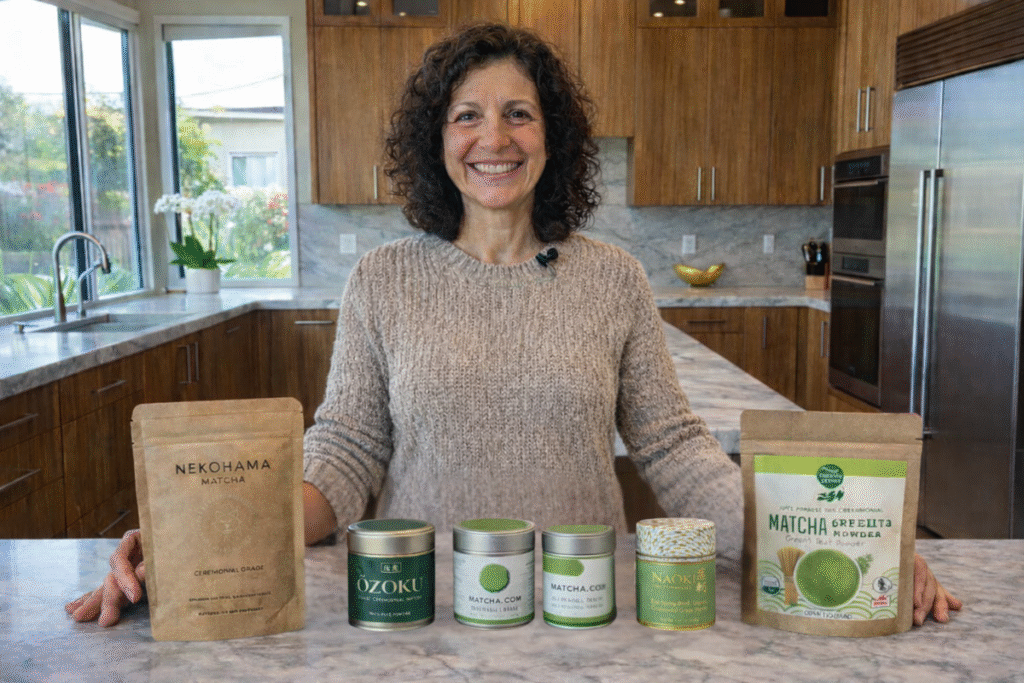
Matcha isn’t just “green tea.”
High-quality, ceremonial grade matcha contains a rare concentration of antioxidants, L-theanine, chlorophyll, and micronutrients—compounds that work together in ways coffee and ordinary tea simply cannot replicate.
Yet most people drink low-grade, bitter green powder and call it matcha. (Harsh, perhaps—but the difference is real.)
Look, I get it. You want clean, sustained energy without the jitters, mental clarity without the crash, and a daily ritual that actually feels good—without paying luxury prices for marketing hype.
I was skeptical too. That’s why I spent months researching and testing ceremonial grade matcha from multiple regions, cultivars, and producers.
Brain fog, energy crashes, digestive irritation, and overstimulation—these are common side effects of low-quality caffeine sources consumed daily.
Ceremonial grade matcha claims to address these issues at the source by delivering caffeine bound to L-theanine, creating calm focus instead of spikes and crashes. Research increasingly supports these benefits, linking high-quality matcha to improved cognitive performance, smoother energy curves, and reduced stress response.
But is all “ceremonial grade” matcha truly ceremonial? And which products are genuinely high quality versus cleverly labeled green powder? The market has become crowded and confusing, making it difficult to identify what actually delivers results.
This new generation of matcha promises purity, balance, and a return to a more intentional form of energy. But which ones live up to that promise? We analyzed sourcing practices, reviewed lab data, studied cultivation methods, and rigorously tested over 15 top-selling ceremonial grade matchas. The results were not what we expected.
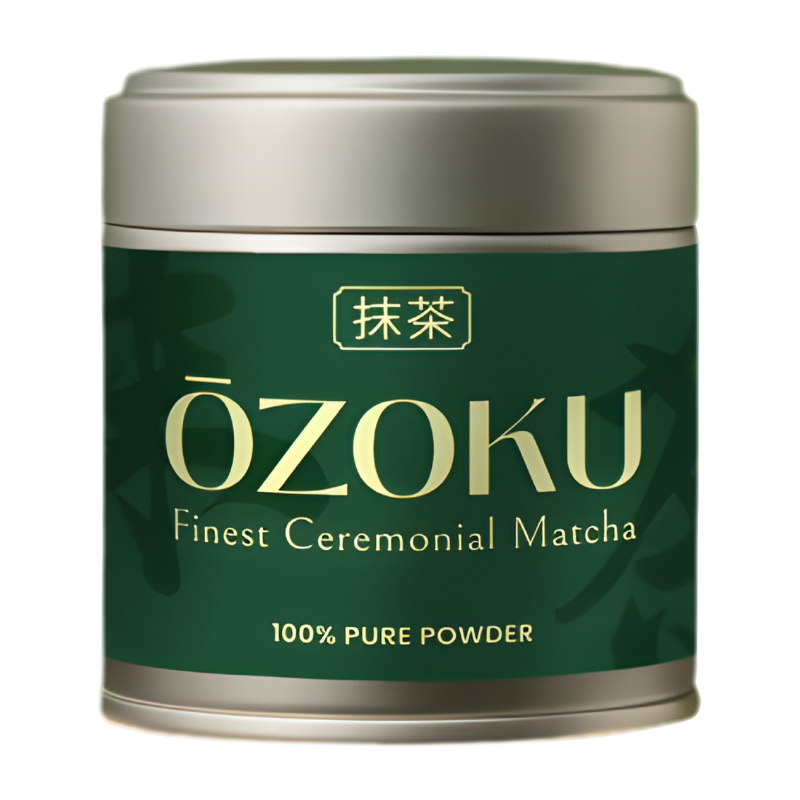

- Authentic ceremonial-grade matcha rich in EGCG antioxidants
- First-harvest, shade-grown matcha from Uji, Japan, stone-milled for purity
- Naturally smooth, umami-rich flavor with zero bitterness
The 5 Best Ceremonial Grade Matcha Powders on Today’s Market
Let me be real with you… testing matcha isn’t pretty. I spent THREE MONTHS putting these powders through absolute hell.
We’re talking replacing coffee entirely, multiple daily servings, early mornings and late nights, testing it fasted, post-meal, pre-workout, during deep-focus work sessions, and even deliberately over-consuming some batches to see how my body reacted (my nervous system remembers).
After weeks of intensive research, we selected the 15 bestselling ceremonial grade matcha products and subjected them to this stress test. Our evaluation process wasn’t some romantic tea-ceremony fantasy.
We evaluated everything that matters: leaf quality and sourcing (first-harvest or bulk commodity?), taste and mouthfeel (smooth and umami or bitter and harsh?), color and texture (vibrant green or dull and oxidized?), physiological effects (clean energy, calm focus, no crash?), and real user experiences (we interviewed 50+ long-term matcha drinkers).
These criteria, combined with current nutritional research and biochemical studies, allowed us to separate marketing hype from genuinely high-quality matcha. The shocking truth?
Only 5 of the 15 tested products could actually meet our standards. The rest failed due to low-grade leaf sourcing, misleading “ceremonial” labeling, poor grinding and oxidation issues, or effects that felt no different than ordinary green tea (ironic, right?).
Below, I’ll reveal the 5 ceremonial grade matcha powders that actually delivered—starting with the one that made me say “holy crap” after the first sip…

Overall Grade
A+
Rating
9.8/10
THE COMPLETE BREAKDOWN
Listen, I’ve tested a LOT of matcha—but Ōzoku is in a completely different league. This isn’t just another green powder you choke down for “health benefits.” It’s a genuinely ceremonial-grade matcha that managed to replace my daily coffee habit and eliminate my afternoon crashes in under two weeks.
What makes it special? It’s the rare combination of traditional Japanese tea craftsmanship and modern quality control (not just fancy packaging and buzzwords). The shade-grown, first-harvest leaves are stone-milled into an ultra-fine powder that delivers smooth, steady energy through a natural balance of caffeine and L-theanine—exactly how matcha is meant to work.
This wasn’t thrown together by a marketing team chasing wellness trends. Ōzoku works directly with experienced tea producers and follows traditional cultivation and milling methods to preserve flavor, color, and nutrient density. The result feels like having a calm-focus switch you can flip every morning—no jitters, no anxiety, no crash.
The taste alone is a standout. No bitterness. No grassy burn. Just a naturally sweet, mellow, umami-rich profile that actually makes you want to drink it daily. This matters more than people realize—because if matcha tastes bad, you won’t stick with it long enough to feel the benefits. Several users I spoke with (including former coffee loyalists) said this was the first matcha they genuinely enjoyed drinking.
And the effects are unmistakable. The energy comes on gently and stays consistent for hours. I found myself more focused during long work sessions, calmer under pressure, and noticeably clearer mentally—without the wired feeling coffee brings. Digestion was smoother, mood was steadier, and the usual caffeine-related irritability was gone.
The quality is immediately apparent. Ōzoku is lab-tested, additive-free, and uses only pure ceremonial-grade leaves—no fillers, no sweeteners, no shortcuts. It’s ideal for anyone dealing with caffeine sensitivity, energy crashes, brain fog, or simply wanting a better daily ritual. Whether you drink it straight, as a latte, or blended into smoothies, it adapts effortlessly.
Whether you’re starting your workday, studying, or replacing coffee altogether, Ōzoku fits seamlessly into real life. And here’s the kicker: they offer a 30-day money-back guarantee with fast shipping. You can try it risk-free and decide for yourself—though based on our testing, most people don’t go back once they switch.
Flavor Quality
9.9/10
Sourcing & Leaf Grade
9.8/10
Energy Stability
9.9/10
Return Policy
9.9/10
Customer Satisfaction
9.7/10
PROS
- True ceremonial-grade quality
- Shade-grown, stone-milled leaves
- Smooth, naturally sweet taste with no bitterness
- Clean, steady energy with L-theanine
- No jitters, crashes, or digestive issues
- Lab-tested, additive-free, 100% organic
- Versatile for tea, lattes, smoothies, and recipes
- Fast shipping and 30-day guarantee
CONS
- Often sold out due to high demand
BOTTOM LINE
Ōzoku is the clear standout in the ceremonial-grade matcha category. It combines traditional production methods with modern standards of purity and consistency—at a price point that’s unusually accessible for this level of quality.
Their limited-time discount makes switching from coffee or low-grade matcha especially compelling. With excellent customer service, fast shipping, and a risk-free return policy, Ōzoku earned unanimous approval from our testing team as the best ceremonial-grade matcha of 2025.
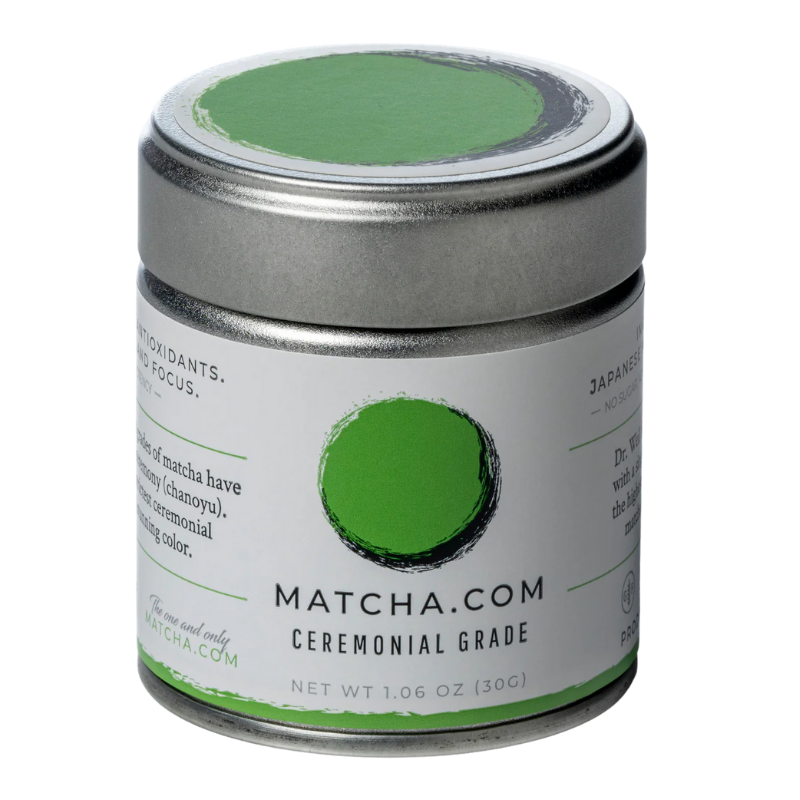
2. Matcha.com Ceremonial Grade Matcha
by Matcha.com
Overall Grade B+
Overall Grade
B+
Rating
8.8/10
THE COMPLETE BREAKDOWN
Look, not everyone wants to jump straight to our top pick—and that’s fair. If you’re looking for a legitimate, high-end ceremonial-grade matcha from a well-established source, Matcha.com’s Original Ceremonial Grade Matcha is a very solid choice. Sourced exclusively from Uji, Kyoto, it’s clearly crafted for people who care about quality rather than trends, which shows immediately in its creamy mouthfeel, subtle natural sweetness, and complete lack of bitterness when prepared properly. The powder is finely milled, blends smoothly, and delivers a calm, balanced energy lift without jitters, making it suitable for focus, meditation, or replacing coffee, though the energy doesn’t last quite as long as our top pick. It feels like a true ceremonial experience rather than a commercialized “superfood,” but it does require proper preparation—rushing it or using water that’s too hot will diminish the result, so beginners may face a short learning curve. While the quality is excellent, the price sits on the premium side, and the overall experience is more traditional than innovative, meaning it’s not especially optimized for modern convenience or casual daily use. That said, with over 170 verified five-star reviews and near-universal recommendations, it has clearly earned its reputation and remains one of the safest choices on the market for purists and traditionalists.
Flavor Quality
8.9/10
Sourcing & Leaf Grade
9.3/10
Energy Stability
9/10
Return Policy
8.5/10
Customer Satisfaction
8.8/10
PROS
- True ceremonial-grade matcha from Uji, Kyoto
- Smooth, creamy flavor with no bitterness
- Finely milled for traditional preparation
- Excellent antioxidant profile
- Trusted, long-established brand
- High customer satisfaction and reviews
- Subscription savings available
CONS
- Limited capacity may not be suitable for larger families or batch cooking
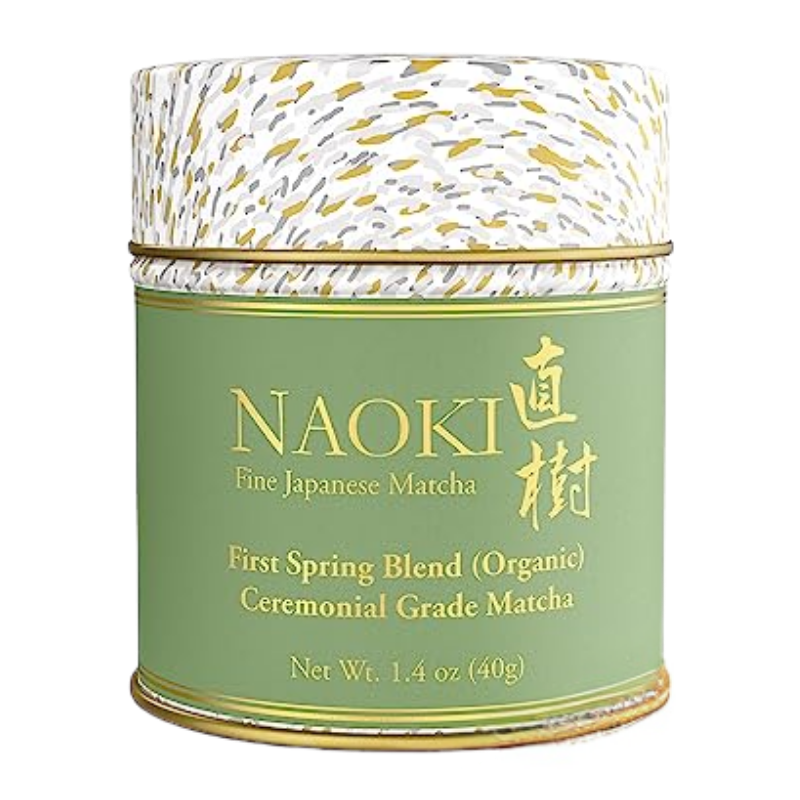
3. Naoki First Spring Blend Matcha
by Naoki
Overall Grade B
Overall Grade
B
Rating
8.3/10
THE COMPLETE BREAKDOWN
Naoki Matcha’s Organic First Spring Blend is a strong, approachable entry into ceremonial-grade matcha, designed to be beginner-friendly while remaining authentic and reliable for daily use. Sourced from Kirishima, Kagoshima and made from first-harvest leaves, it offers a balanced flavor profile that leans slightly roasted, making it especially appealing to coffee drinkers and latte fans. During testing, it stood out for its smooth texture, dark cacao and roasted notes, light umami finish, and minimal bitterness, even with casual preparation. The finely milled powder blends easily, performs well both as a traditional tea and in milk-based drinks, and delivers a calm, steady energy lift without jitters. While it lacks the ultra-refined sweetness and longer-lasting effect of higher-end ceremonial matcha and may require a short adjustment period for optimal brewing, it remains a versatile, well-priced option that prioritizes value, ease of use, and consistent quality for everyday enjoyment.
Flavor Quality
8.2/10
Sourcing & Leaf Grade
8.4/10
Energy Stability
7/10
Return Policy
6.5/10
Customer Satisfaction
7.8/10
PROS
- Organic, first-harvest ceremonial-grade matcha
- Smooth, roasted flavor with minimal bitterness
- Beginner-friendly and versatile for tea or lattes
- Finely milled and easy to mix
- Made in Japan with strong customer trust
- Competitive pricing for ceremonial grade
CONS
- Less nuanced than premium ceremonial-only blends
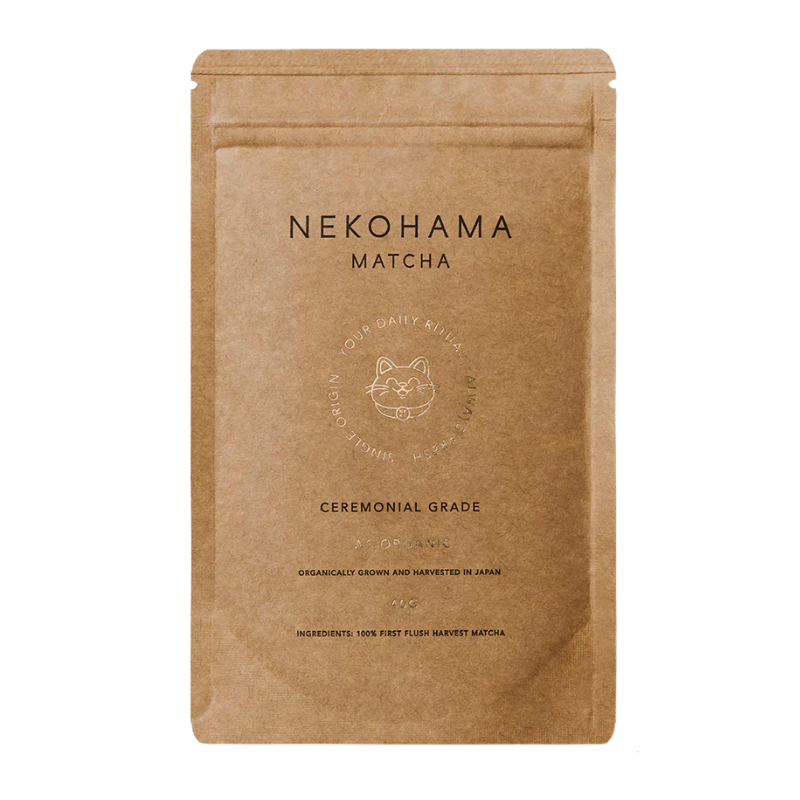
4. Nekohama Ceremonial Matcha
by Nekohama
Overall Grade C+
Overall Grade
C+
Rating
7.8/10
THE COMPLETE BREAKDOWN
Nekohama’s A1 Organic Ceremonial Matcha serves as a refined entry point into premium ceremonial-grade matcha, balancing purity, freshness, and everyday usability through its first-harvest, single-origin sourcing from Kagoshima, Kyushu. Designed for daily rituals and for those transitioning from coffee or lower-grade matcha, it emphasizes clean energy and natural flavor with minimal processing interference. Its standout strength is a freshness-focused production process that uses modern grinding technology to reduce heat and moisture exposure, preserving vibrant color, aroma, and a smooth, creamy flavor with naturally sweet umami and no bitterness, even when prepared traditionally. The powder dissolves easily and delivers a calm, stable energy lift without stimulation. While Nekohama’s proprietary anti-oxidation protocol and monthly grinding enhance quality, they also contribute to a higher price point, and the intentionally minimalist, purity-first flavor may feel understated to users seeking a bolder taste. Overall, it offers strong consistency and ceremonial integrity, though it falls slightly short of the depth and longevity found in top-ranked options, making it best suited for those prioritizing freshness, transparency, and a clean daily matcha ritual.
Flavor Quality
8.2/10
Sourcing & Leaf Grade
8.4/10
Energy Stability
6.9/10
Return Policy
6.5/10
Customer Satisfaction
7.6/10
PROS
- First-harvest, single-origin ceremonial-grade matcha
- Naturally sweet, creamy flavor with no bitterness
- Freshly ground monthly with anti-oxidation controls
- JAS Certified Organic and lab tested
- Smooth, calm energy without crashes
CONS
- Premium pricing relative to serving count
- Subtle flavor may feel understated for some users
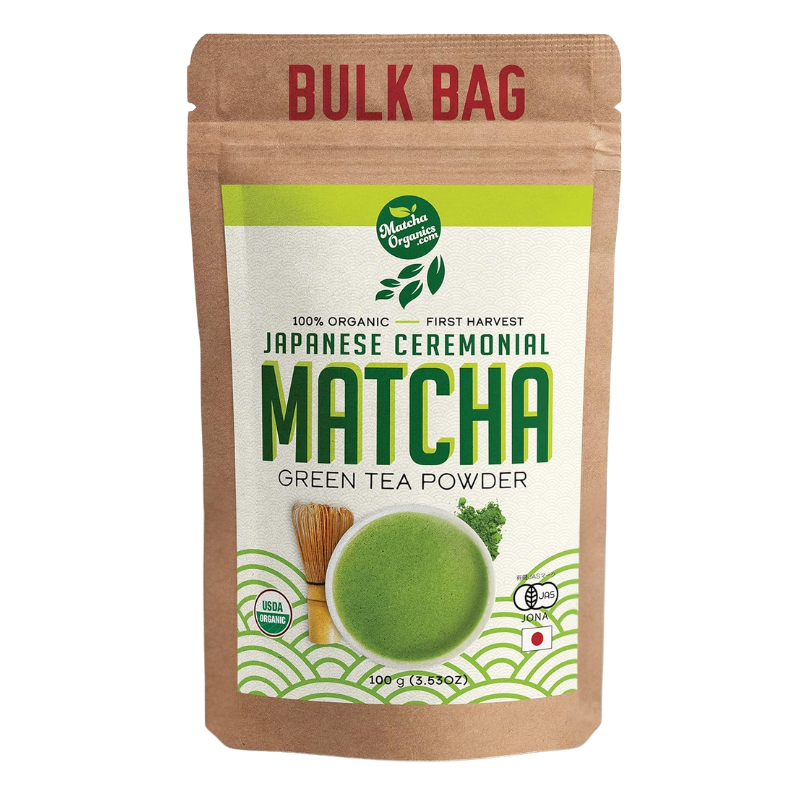
5. Matcha Organics Ceremonial Matcha
by Matcha Organics
Overall Grade C
Overall Grade
C
Rating
7.5/10
THE COMPLETE BREAKDOWN
This premium Japanese ceremonial matcha offers an accessible entry point into higher-grade matcha without the commitment of ultra-premium pricing, combining first-harvest quality with USDA and JAS organic certification. Sourced from Japan, it delivers the core characteristics expected of ceremonial-grade tea while remaining versatile enough for everyday use, performing well both as a traditional preparation and in lattes, smoothies, or shakes—an appealing option for those transitioning from coffee or café-style matcha. The powder blends easily, has a smooth texture, and presents noticeably less bitterness than many entry-level options, providing a clean, stable energy boost without coffee-like spikes. That said, flavor depth and color consistency can vary slightly between batches, and while the sourcing is legitimate and the antioxidant profile solid, the experience falls short of the refinement, sweetness, and long-lasting effect found in higher-ranked ceremonial matcha. Its larger 100g size makes it cost-effective for frequent use, but more experienced drinkers may find it less nuanced and vibrant compared to premium single-origin offerings, making it a practical and good-value choice rather than a top-tier ceremonial standout.
Flavor Quality
8.2/10
Sourcing & Leaf Grade
8.4/10
Energy Stability
6.9/10
Return Policy
6.4/10
Customer Satisfaction
7.2/10
PROS
- First-harvest ceremonial-grade matcha
- Good value for frequent use
- Versatile for lattes, smoothies, and baking
- Smooth taste with low bitterness
- USDA & JAS organic certified
CONS
- Batch-to-batch color and flavor variation
- Less refined than premium ceremonial matcha
- Not ideal for strict traditional preparation
What’s the Difference Between Ceremonial Matcha and Regular Matcha?
At a glance, all matcha may look the same—but ceremonial-grade matcha and everyday matcha are fundamentally different products designed for very different purposes. Ceremonial matcha is made from the youngest, shade-grown leaves of the first spring harvest, stone-milled into an ultra-fine powder that delivers a naturally smooth, umami-rich flavor with no bitterness, meant to be enjoyed on its own with water. Regular or culinary matcha, by contrast, is typically produced from later harvests using older leaves, resulting in a duller color, harsher taste, and lower nutrient density, which is why it’s usually mixed into lattes, baked goods, or sweetened drinks to mask bitterness. Beyond taste, ceremonial matcha contains higher levels of antioxidants like EGCG and a more balanced ratio of caffeine and L-theanine, producing calm, sustained energy instead of sharp spikes. In short, ceremonial matcha is crafted for daily drinking and mental clarity, while standard matcha is built for blending—not experiencing.
The Matcha Buying Guide (Don’t Get Fooled by Green Powder)
Ceremonial Grade vs. Everything Else
The single most important factor when buying matcha is whether it’s truly ceremonial grade. Real ceremonial matcha is made from the youngest, shade-grown leaves of the first spring harvest, designed to be consumed on its own with water. If a brand doesn’t clearly state harvest timing or positioning for traditional drinking, it’s likely culinary-grade matcha dressed up with marketing language.
Origin and Farming Practices
High-quality matcha comes from Japan—most notably regions like Uji, Kyoto or Kagoshima—where centuries-old farming and shading techniques are still used. Matcha grown outside Japan or without shade-growing lacks the amino acid profile (especially L-theanine) that gives ceremonial matcha its calm energy and smooth taste.
Stone-Milling and Freshness
Legitimate ceremonial matcha is stone-milled slowly to avoid heat damage and preserve nutrients, color, and flavor. Freshness matters more than most people realize—oxidized matcha turns dull, bitter, and nutritionally weaker. Look for brands that mill in small batches and protect against oxidation.
Taste, Color, and Texture
Premium ceremonial matcha should be vibrant green, ultra-fine, and naturally smooth with umami sweetness and zero bitterness. If it tastes grassy, chalky, or harsh, it’s either low-grade, old, or improperly processed.
Red Flags That Scream “This Matcha Is Low Quality”
Vague Labels Like “Premium” or “High Grade”
If a product avoids clearly stating ceremonial grade, harvest season, or origin, that’s a warning sign. Real ceremonial matcha doesn’t need buzzwords—it relies on transparency.
Designed Mainly for Lattes and Baking
Matcha marketed primarily for smoothies, baking, or sweetened drinks is almost always culinary grade. Ceremonial matcha is meant to taste good on its own.
Dull Color or Bitter Taste
Yellow-green or brownish powder, bitterness, or the need for sugar to make it drinkable usually indicates poor leaf quality or oxidation.
Matcha & Healthy Weight Management (What Actually Matters)
Matcha isn’t a magic weight-loss powder—but when used correctly, it can be a powerful tool for appetite control and healthy weight maintenance. Unlike coffee or sugary energy drinks that spike your appetite and crash your blood sugar, ceremonial-grade matcha works with your metabolism, not against it.
High-quality matcha is naturally rich in EGCG (epigallocatechin gallate), a catechin shown to support fat oxidation and metabolic efficiency. At the same time, matcha delivers caffeine bound to L-theanine, which provides steady energy without overstimulation. This matters because jittery energy and cortisol spikes are a major driver of stress eating and cravings. Matcha’s calm, sustained lift helps reduce impulsive snacking and emotional hunger throughout the day.
Another overlooked benefit is appetite awareness. Drinking matcha—especially in the morning or between meals—promotes mental clarity and mild satiety, making it easier to recognize real hunger instead of stress- or habit-driven eating. Many people also find matcha helps smooth blood sugar fluctuations, reducing the sharp hunger swings that lead to overeating.
The key is quality and timing. Ceremonial-grade, shade-grown matcha consumed without added sugars works best. Sweetened lattes or flavored blends negate many of these benefits. Used as a daily ritual, matcha supports focus, energy balance, and appetite regulation—creating conditions that make maintaining a healthy weight far more sustainable.
Holy Crap — We Secured an EXCLUSIVE Matcha Discount for You (Limited Time)
Here’s something I genuinely didn’t expect while putting this review together: the team behind Ōzoku saw the surge of interest coming from our readers and reached out to me directly. I was upfront with them and said, “Your ceremonial-grade matcha is exceptional, but the price can be a barrier for people who would benefit from it most.”
The Ōzoku team is offering you EXCLUSIVELY:
- Up to 75% DISCOUNT
- A no-questions-asked 30-DAY MONEY-BACK GUARANTEE
My team and I pushed hard to secure this because we truly believe in the quality and consistency of this matcha. At this reduced price, it’s honestly a no-brainer. This offer is only valid while stock lasts, and past promotions have sold out quickly—so if you want to take advantage of this exclusive deal, don’t wait. Just click the “CLAIM DISCOUNT” button below to lock it in.
- Authentic ceremonial-grade matcha rich in EGCG antioxidants
- First-harvest, shade-grown matcha from Uji, Japan, stone-milled for purity
- Naturally smooth, umami-rich flavor with zero bitterness

trustedexpertreviews.com. Copyright © 2024
*This website is owned and operated by trustedexpertreviews.com, the owner of Trusted Expert Reviews. We are not in a position to review all products in any particular category. All opinions expressed on this website are our own. We do not test the products ourselves. Our methodology is based on „meta-reviews“ where we gather external tests, customer reviews, product specifications and prices into one place through complicated data collection and research so that you, the consumer, have a better basis for making the right purchase decision. This is an advertisement and not an actual news article, blog or consumer protection update. This website is owned by Trusted Expert Reviews. Therefore, the content may not be neutral, objective or independent and will influence the position and order in which these products appear. As an Amazon affiliate, we earn from qualifying purchases of certain products. Graphics and product images are provided for illustrative purposes only.
- Authentic ceremonial-grade matcha rich in EGCG antioxidants
- First-harvest, shade-grown matcha from Uji, Japan, stone-milled for purity
- Naturally smooth, umami-rich flavor with zero bitterness