
The 5 Best No-Installation Space Heaters That Cut Your Winter Heating Bill (We Compared 14)
Can a small plug-in heater keep you warm all winter without your bill exploding — no furnace running all day, no $300 January statement, no heating rooms nobody's in? We compared 14 popular models. Most fell short. Here's what made it through.

Written by Jake
on November 4th, 2026
Senior Home Energy Reviewer | Heating & Utility Costs
If you’ve ever opened a January utility bill and felt your stomach drop, you know the problem.
It’s 28°F outside and your furnace has been running since breakfast. The house is warm, but you’re paying to heat every room, including the guest room, the hallway and the dining room you use twice a year, just so the one room you’re in feels comfortable.
And this winter it’s getting worse. The National Energy Assistance Directors Association expects the average family to spend $1,030 on heating, $82 more than last year. That’s an 8.7% jump, more than 2.5 times inflation. Homes heated with electricity face about 9% more, and 275+ utilities have raised rates or asked to since 2025.
That isn't a cold problem. That's a bill problem.
I’ve reviewed home appliances for 11 years. For the past 3 months, one question kept me busy: which space heaters warm the room you’re in, so you can finally turn the thermostat down?
Here’s what most brands hope you won’t notice: nearly every “energy-saving” heater draws the same 1,500 watts on high. At about 18¢ per kWh, that’s roughly 27¢ an hour, or about $65 a month at 8 hours a day. Many are “eco” in name only.
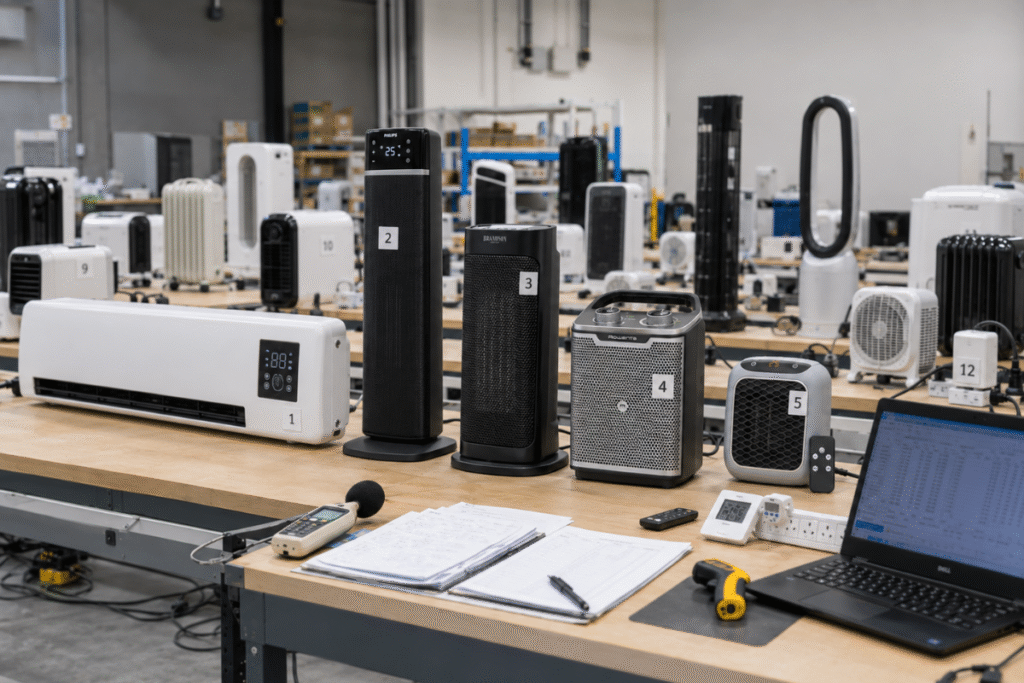
So I compared 14 bestselling heaters side by side: wattage on every setting, thermostats, safety features, warranties and return policies. I also read thousands of verified reviews from people heating real bedrooms and home offices.
Only 5 heaters warmed a room quickly while keeping power draw sensible. The rest skipped basic safety features, ran at 1,500 watts with no lower setting, or were so loud owners gave up within a week.
Below are the ones that earned their spot, starting with the wall heater 17,673+ customers rate 4.8/5, which runs on just 400 to 800 watts.
Our Top 5 at a Glance
The 5 Best Space Heaters for a Lower Winter Bill Right Now
I gave this three months, checking everything that decides whether a heater actually lowers your bill or just moves the cost around. Every heater was graded on:
1) Energy use: How many watts does it draw? Does it have lower settings, and a thermostat that shuts it off once the room is warm? 2) Heating power: Does it warm a whole bedroom or office, or just the air in front of it? 3) Ease of use: Remote, clear controls, no electrician needed? 4) Safety & space: Overheat and tip-over protection, and can it stay off the floor, away from kids, pets and cords? 5) Customer satisfaction: What owners say after a full winter, not just week one.
Once the research phase wrapped, I narrowed it to the 14 most popular heaters and graded each one on:
The hard truth: only 5 of 14 cleared the bar. Many “energy-saving” heaters just add an “ECO” button that cycles the same 1,500-watt element on and off, which any decent thermostat already does.
With electricity at about 18¢/kWh, the gap between a 1,500-watt and an 800-watt heater adds up to real money by March. Here are the 5 that made the cut.
(Best overall for cutting your heating bill — rated 4.8/5 by 17,673+ customers)
Overall Grade A+

Overall Grade
A+
Rating
9.8/10
OVERALL ANALYSIS
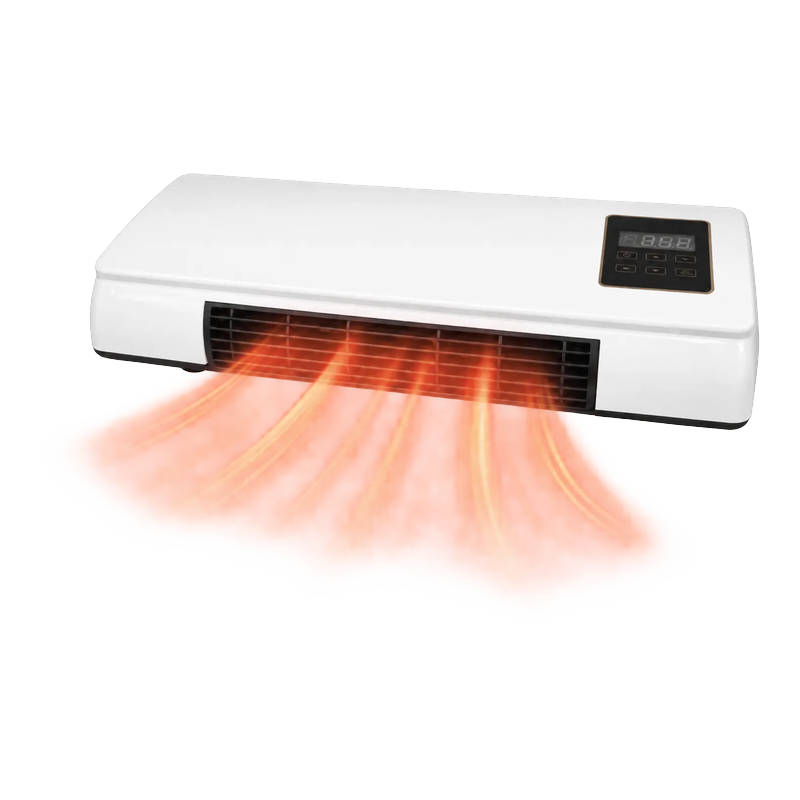
Listen, I’ve looked at a LOT of space heaters, but Cozy Cove Pro™ is in a different league when it comes to the one thing most families are fighting this winter: the bill. Running the furnace all day to heat a whole house just so one room is comfortable is one of the most expensive ways to stay warm there is — and Cozy Cove Pro is built to end exactly that.
What makes it special? It heats the room you’re actually in while drawing just 400 to 800 watts — about half of what a typical 1,500-watt heater pulls. At today’s average of about 18¢ per kilowatt-hour, that works out to roughly 7¢ to 14¢ an hour. Turn the central thermostat down, switch Cozy Cove Pro on in the bedroom, office or den, and the brand says you’ll feel the difference in about 5 minutes. The U.S. Department of Energy estimates that setting your thermostat back 7–10°F for 8 hours a day can save up to 10% a year — Cozy Cove Pro is what makes that comfortable.
Inside is advanced ceramic (PTC) heating with what Cozy Cove calls its RapidHeat™ airflow system: a quiet fan pushes the warm air out into the room instead of letting it pool around the unit. You control it from the touchscreen or the included remote, so you can nudge the temperature without getting out of your chair — and overheat protection shuts it off automatically if it ever runs too hot inside.
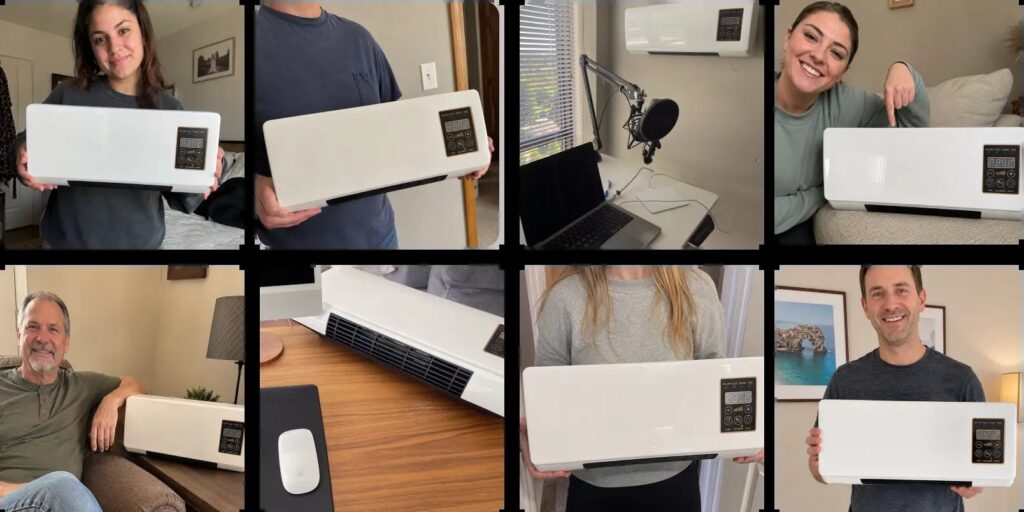
The design is the other big win. At 2.7 lb and under 5 inches deep, it mounts on the wall with the included hardware — up and out of reach of kids, pets and tripping feet — or sits flat on a shelf, dresser or tabletop. No electrician, no ductwork, no annual service. You just plug it into a standard outlet.
Owners keep coming back to the same points. “I am always careful about gas furnace because it gets so expensive. Now I just run this unit in the living room while I watch television. My last power bill was much lower,” writes Jim L. Margaret R. says she isn’t handy but had hers on the wall in minutes, and Dennis B. finally sleeps through the night because it’s quiet enough for the bedroom.
Cozy Cove Pro backs every order with a 90-day money-back guarantee and ships fast from a U.S. warehouse in Ohio — and with a 4.8-star rating from 17,673+ customers, it’s not a gamble.
Energy Savings
9.9/10
Heating Power
9.4/10
Ease of Use
9.9/10
Space & Safety
9.8/10
Customer Satisfaction
9.8/10
BENEFITS
- Warms a chilly room in about 5 minutes with ceramic PTC heating
- Runs on just 400–800 watts — about half a typical space heater
- Wall-mounted or flat on a shelf, off the floor and out of the way
- Touchscreen + wireless remote for precise temperature control
- Overheat protection with automatic shut-off
- Whisper-quiet — made for bedrooms and late-night reading
- Just plug it in — no electrician, no installation
- Lightweight 2.7 lb design, easy to move from room to room
- Ships fast from the USA
- 90-Day Money-Back Guarantee
DRAWBACKS
- Built for one room at a time, and stock sells out fast in cold snaps
CONCLUSION
Cozy Cove Pro™ is the clear leader for cutting your winter heating bill — real, targeted warmth on a fraction of the power, with no tools, no install, and no furnace running all day to heat empty rooms. Right now its Black Friday sale takes 50% off one heater, or 70% off when you take three (one each for the bedroom, the office and the living room) with code BF26, while stocks last.
Every order is covered by a 90-day money-back guarantee and ships fast from the USA. Rated 4.8 stars by 17,673+ customers, it’s the simplest way we found to take the sting out of this winter’s higher bills.
#2 — Dreo Atom One Space Heater
(Best for anyone who wants a smart little floor heater with an ECO mode at a budget price)
Overall Grade B+
Overall Grade
B+
Rating
8.8/10
OVERALL ANALYSIS
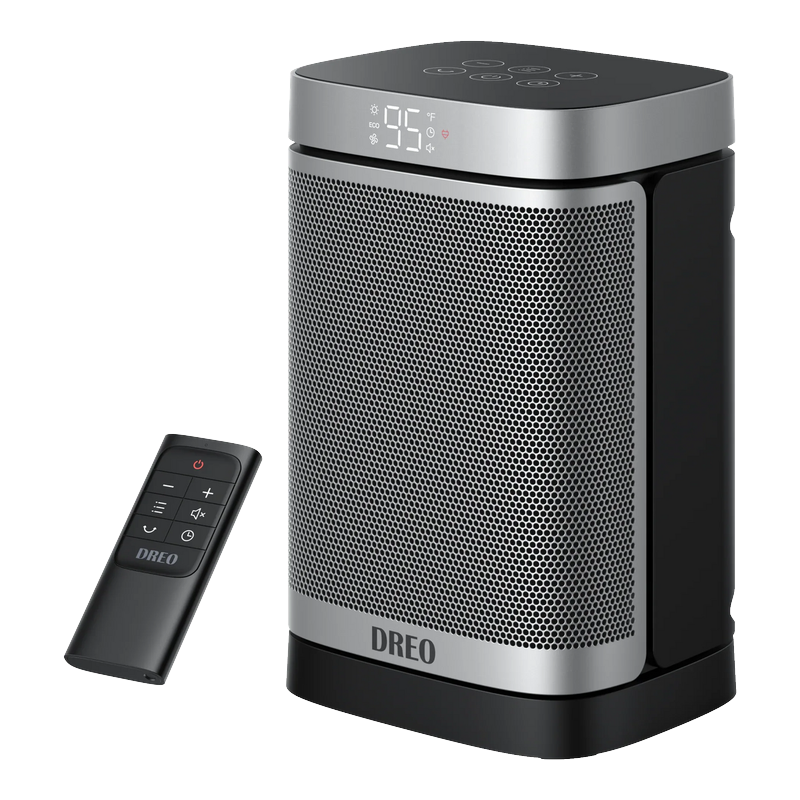
Not everyone wants something on the wall — and if you’d rather have a compact unit you can set down anywhere, the Dreo Atom One deserves a serious look. Dreo is one of the biggest names in space heaters right now, and the Atom One packs a lot into a small, sturdy box for $49.99 on Dreo’s own store.
It runs between 1,000 and 1,500 watts with three heat levels plus an ECO mode that eases off once the room reaches your target, and its digital thermostat lets you pick anything from 41°F to 95°F in 1-degree steps. Add 70° oscillation, a 12-hour timer and a remote, and it’s genuinely easy to live with. Dreo rates it at 37.5 dB — quiet enough for a bedroom.
Safety is covered with tip-over and overheat protection, and Dreo backs it with a 12-month warranty and a 30-day return window (you pay return shipping on non-defective returns).
I need to be straight with you, though: even its lowest setting draws 1,000 watts — more than Cozy Cove Pro on full power. At 18¢ per kWh that’s about 18¢ to 27¢ an hour, and as a floor unit it still takes up space and trails a cord across the room. A great budget heater — but if your goal is the lowest bill, our top pick goes further.
Energy Savings
8.6/10
Heating Power
9.2/10
Ease of Use
9.0/10
Space & Safety
8.3/10
Customer Satisfaction
8.9/10
BENEFITS
- 1,000–1,500W with 3 heat levels plus ECO mode
- Digital thermostat from 41°F to 95°F
- Quiet 37.5 dB rating — bedroom friendly
- 70° oscillation spreads the warmth
- Remote control and 1–12 hour timer
- Tip-over and overheat protection
- Budget price: $49.99
DRAWBACKS
- Never drops below 1,000 watts, and it sits on the floor
#3 — Vornado MVH Vortex Heater
(Best for anyone who wants simple whole-room heat backed by a 5-year warranty)
Overall Grade B
Overall Grade
B
Rating
8.3/10
OVERALL ANALYSIS
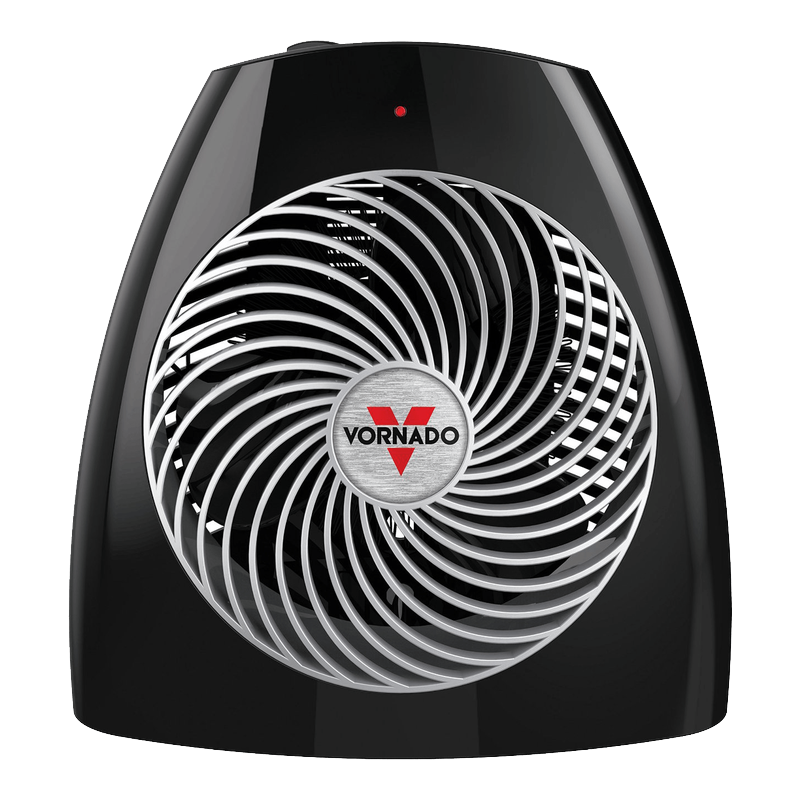
If you want a no-nonsense heater from a brand with real engineering behind it, the Vornado MVH is worth a look. Vornado built its name on air circulation, and the MVH uses that same vortex airflow to move warm air around the whole room instead of just heating the spot in front of it. It’s compact (about 4 lb) and lists at $69.99 on Vornado’s site.
Controls are refreshingly simple: three heat settings (750, 1,125 and 1,500 watts) and an adjustable thermostat dial. Safety is solid — tip-over protection, a two-stage automatic shut-off, and a case that stays cool to the touch even after hours of use. And Vornado backs it with a 5-year limited warranty, the longest in this lineup.
Where it falls short: there’s no remote and no digital display, so you’re up and down adjusting dials, and even the low setting pulls 750 watts, with high climbing to 1,500. It also sits on the floor, within reach of kids and pets. A dependable classic, but not the cheapest heater to run.
Energy Savings
7.8/10
Heating Power
9.5/10
Ease of Use
7.8/10
Space & Safety
8.4/10
Customer Satisfaction
8.2/10
BENEFITS
- Vortex airflow circulates heat around the whole room
- Three heat settings: 750, 1,125 and 1,500 watts
- Adjustable thermostat
- Tip-over protection and 2-stage auto shut-off
- Cool-touch case
- 5-year limited warranty
DRAWBACKS
- No remote control or digital display
- Floor unit that draws up to 1,500 watts
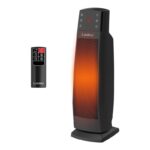
#4 — Lasko 22" Digital Ceramic Tower Heater
(Best for heating a larger living room, if you don't mind a 1,500-watt tower on the floor)
Overall Grade C+
Overall Grade
C+
Rating
7.8/10
OVERALL ANALYSIS
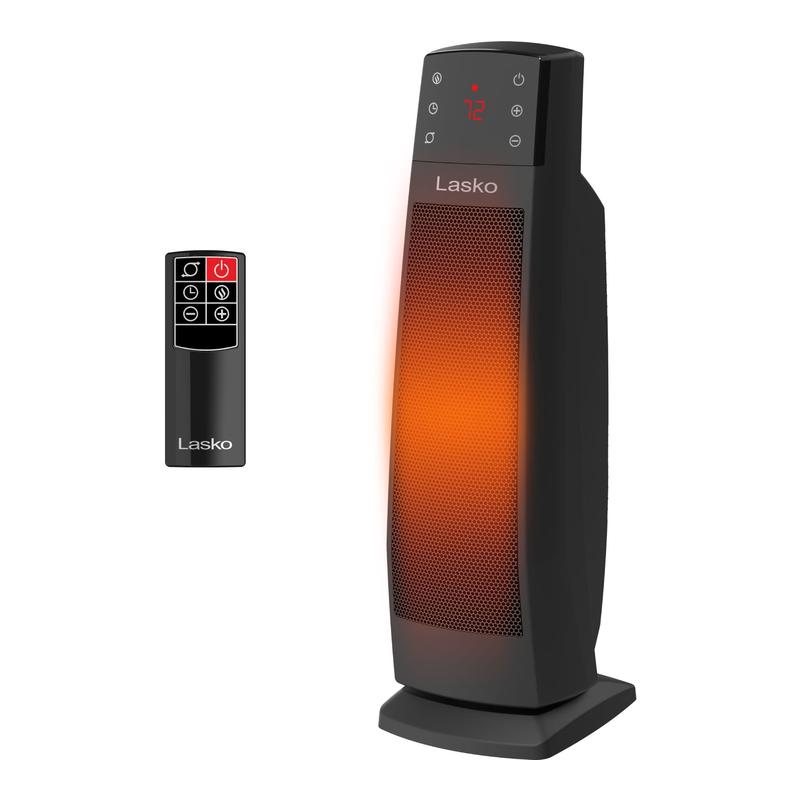
Lasko has been making heaters for American homes for decades, and its 22-inch Digital Ceramic Tower (model CT22850) shows why so many households own one. It’s built for larger rooms: 1,500 watts of ceramic heat, widespread oscillation, and three heat settings.
It’s well equipped for the price — $59.99 on Lasko’s own store — with an adjustable thermostat, an Auto Eco mode that adjusts the output to hold your temperature, a remote, a 12-hour timer and a display that dims automatically at night. Tip-over and overheat protection come standard.
So why only #4? Because it’s a full-size, 1,500-watt floor heater. Run it on high for 8 hours a day at 18¢ per kWh and you’re looking at roughly $65 a month — exactly the kind of bill most of our readers are trying to escape. It’s a good pick for a big family room, but it takes up floor space and has to stay well clear of curtains, bedding and pets.
Energy Savings
7.0/10
Heating Power
9.2/10
Ease of Use
8.3/10
Space & Safety
6.9/10
Customer Satisfaction
7.6/10
BENEFITS
- 1,500W ceramic heat with widespread oscillation
- 3 heat settings plus Auto Eco mode
- Remote control and 12-hour timer
- Tip-over and overheat protection
- Affordable at $59.99
DRAWBACKS
- Draws up to 1,500 watts — about 27¢ an hour on high
- Floor-standing tower takes up space
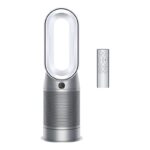
#5 — Dyson Purifier Hot+Cool HP1
(Best for anyone who also wants an air purifier and summer fan — and has a big budget)
Overall Grade C
Overall Grade
C
Rating
7.5/10
OVERALL ANALYSIS
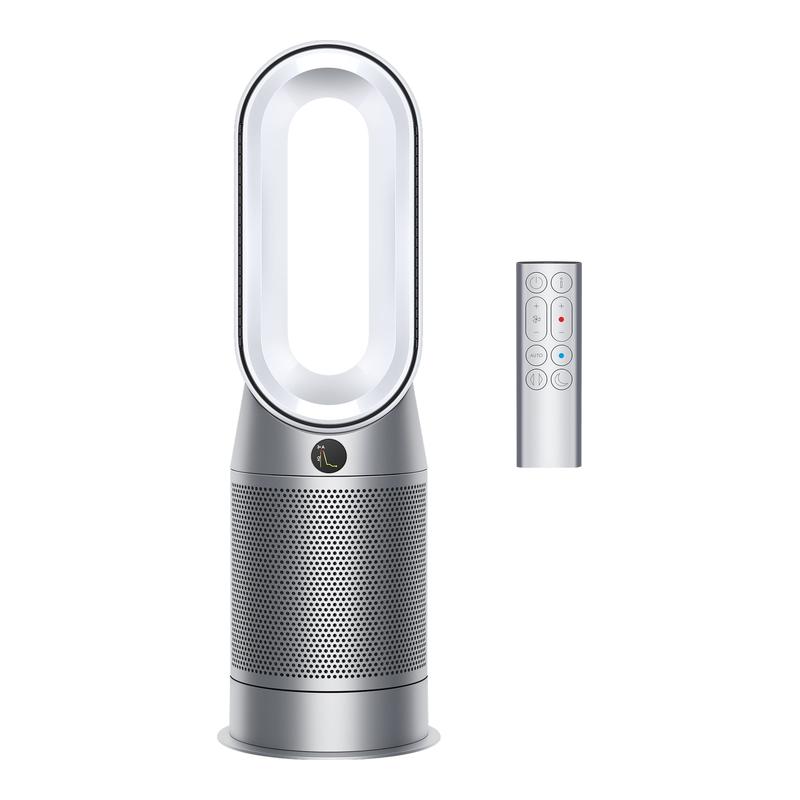
The Dyson HP1 is a different kind of machine: a bladeless heater, fan and air purifier in one, with a sealed HEPA and activated-carbon filter, 350° oscillation, a remote and the MyDyson app. It’s beautifully made, and in summer it doubles as a fan, so it earns its floor space all year.
The catch is the price. Dyson lists it at $659.99 (it often drops to around $450–$500 on sale) — many times the cost of every other heater here. Dyson also says to replace the filter every 12 months, which adds to the running cost, and at 11.7 lb it’s a tall floor unit rather than something you hang out of the way.
As a heater alone, it’s hard to justify on a tight budget: you’re paying mostly for the purifier and the design. Owners are split, too — Dyson’s own page shows about 3.9 out of 5 from roughly 750 ratings, and Ideal Home measured it at 60–70 dB in testing. If clean air matters as much as warmth, it’s a lovely all-in-one. If your goal is a lower heating bill, there are far cheaper ways to get there.
Energy Savings
6.4/10
Heating Power
7.4/10
Ease of Use
8.4/10
Space & Safety
7.5/10
Customer Satisfaction
7.8/10
BENEFITS
- Heater, fan and HEPA air purifier in one
- Remote control and MyDyson app
- 350° oscillation
- Useful all year, not just in winter
DRAWBACKS
- Very expensive: $659.99 list price
- Filter needs replacing every 12 months
- Heavy floor unit (11.7 lb)
Why a Room Heater Makes Sense This Winter
Let’s be honest: in most American homes, the furnace or heat pump is set up to warm every room at once — whether anyone’s in them or not. With electricity around 18¢ per kilowatt-hour and heating bills forecast to climb again this winter, that’s a lot of money spent warming empty rooms. A small, efficient room heater flips the logic: turn the whole-house thermostat down a few degrees and put the warmth exactly where you are — the bedroom at night, the home office by day, the den in the evening. The Department of Energy estimates that setting your thermostat back 7–10°F for 8 hours a day can save up to 10% a year on heating and cooling.
The Space Heater Buying Guide (What Actually Matters)
Watts, Not Promises
Every electric heater turns the electricity it uses into heat, so the wattage tells you what it costs to run. A 1,500W heater costs about 27¢ an hour at today's average rate; an 800W model about 14¢. Choose enough power for your room — and no more.
A Real Thermostat
Look for a thermostat that switches the heater off once the room reaches your temperature. Without one, a heater runs flat out all night. Precise digital controls (and a remote) make it easy to keep the setting low.
Noise Level
Fan heaters vary a lot. If it's going in a bedroom, look for one that owners describe as quiet — a rattling fan is the fastest way to end up with a heater sitting unused in the closet.
Placement & Size
Floor heaters need about 3 feet of clear space around them and take up room. Wall-mounted or shelf models free up the floor and keep hot surfaces and cords away from kids and pets.
Safety Features
Overheat protection is a must, and floor models should have a tip-over switch. Plug heaters straight into a wall outlet — never an extension cord or power strip — and turn them off when you leave the house.
What to Avoid When Buying a Space Heater
Fake "Eco" Claims
A 1,500-watt heater with an "ECO" sticker is still a 1,500-watt heater. Check the actual wattage on each setting and whether a thermostat cycles it off — that's what lowers the bill.
Loud, Rattling Fans
Despite "whisper-quiet" claims, plenty of cheap heaters hum and click all night. Read what owners say about noise before you buy one for a bedroom.
Missing Safety Features
Skip any heater without overheat protection, and any floor model without a tip-over switch. Keep heaters away from curtains, bedding and furniture, and out of reach of small children and pets.
Do Space Heaters Actually Save Money?
Space heaters aren’t magic — but used the right way, they can cut what you spend to stay warm. The secret isn’t a special kind of heat: every electric heater turns its electricity into heat. The savings come from heating one room instead of the whole house. Turn the central thermostat down, warm only the room you’re using, and you stop paying to heat the guest room, the hallway and the basement.
That’s why wattage and control matter so much. A low-wattage heater with a good thermostat, used in a bedroom or office while the rest of the house stays cooler, can noticeably trim a winter bill. A 1,500-watt heater running all day next to a furnace that’s still set to 72°F won’t save a thing. For renters, people in drafty older homes, and anyone who spends most of the day in one or two rooms, a quality room heater is one of the simplest ways to take the sting out of this winter’s higher prices.
We've Found This Black Friday Deal with up to 70% Off for You!
As we're currently receiving many questions about the Cozy Cove Pro™ wall heater, we checked the best deal available to our readers right now. It was important to us that you can try the heater without taking any risk.
Right now, Cozy Cove is offering:
- 50% off one heater, or 70% off when you take three — code BF26
- a 90-day money-back guarantee
- fast shipping from the USA
The Black Friday offer is valid for a limited time only. If you want to use the discount, you shouldn't wait too long. Simply click on the link or "Claim up to 70% off" under the next image.

- Warms your room in minutes on just 400–800 watts
- Plug in and go — on the wall or any shelf, no installation
- Whisper-quiet, with a remote and overheat protection

trustedexpertreviews.com. Copyright © 2026
*This website is owned and operated by trustedexpertreviews.com, the owner of Trusted Expert Reviews. We are not in a position to review all products in any particular category. All opinions expressed on this website are our own. We do not test the products ourselves. Our methodology is based on „meta-reviews“ where we gather external tests, customer reviews, product specifications and prices into one place through complicated data collection and research so that you, the consumer, have a better basis for making the right purchase decision. This is an advertisement and not an actual news article, blog or consumer protection update. This website is owned by Trusted Expert Reviews. Therefore, the content may not be neutral, objective or independent and will influence the position and order in which these products appear. As an Amazon affiliate, we earn from qualifying purchases of certain products. Graphics and product images are provided for illustrative purposes only.